
The Search Landscape Is Changing. Are Nonprofits Ready?
By Shaun Culbertson | March 18, 2026
Article Summary
AI is reshaping how people search for help. For mental health and addiction treatment nonprofits, visibility now depends on more than keywords. It depends on trust.
This guide explains why E-E-A-T for nonprofits is no longer just an SEO concept but a framework for credibility, discoverability, and sustainability in AI-driven search. We break down what Experience, Expertise, Authoritativeness, and Trustworthiness mean for mission-driven organizations and how a thoughtful nonprofit AI SEO strategy ensures the right people find you when they need you most.
From Keywords to Credibility: How AI Search Redefines Nonprofit Visibility
Not long ago, showing up in search meant choosing the right keywords and publishing consistent content.
Today, AI-driven search tools evaluate things more deeply. They assess whether your organization demonstrates real-world experience, subject matter expertise, recognized authority, and trustworthiness.
In other words, they are measuring E-E-A-T.
For nonprofit mental health and addiction treatment SEO and marketing, this shift is significant. People searching for help are often in crisis. AI platforms are prioritizing content that feels credible, transparent, and human.
Kelly Farrell of designRoom puts it simply: “AI is not replacing human connection. It’s measuring it. If your organization is doing meaningful work but not clearly communicating it, AI can’t see it. And if AI can’t see it, the people who need you can’t either.”
That is where a nonprofit AI SEO strategy becomes essential.
What Is E-E-A-T and Why Does It Matter for Nonprofits?
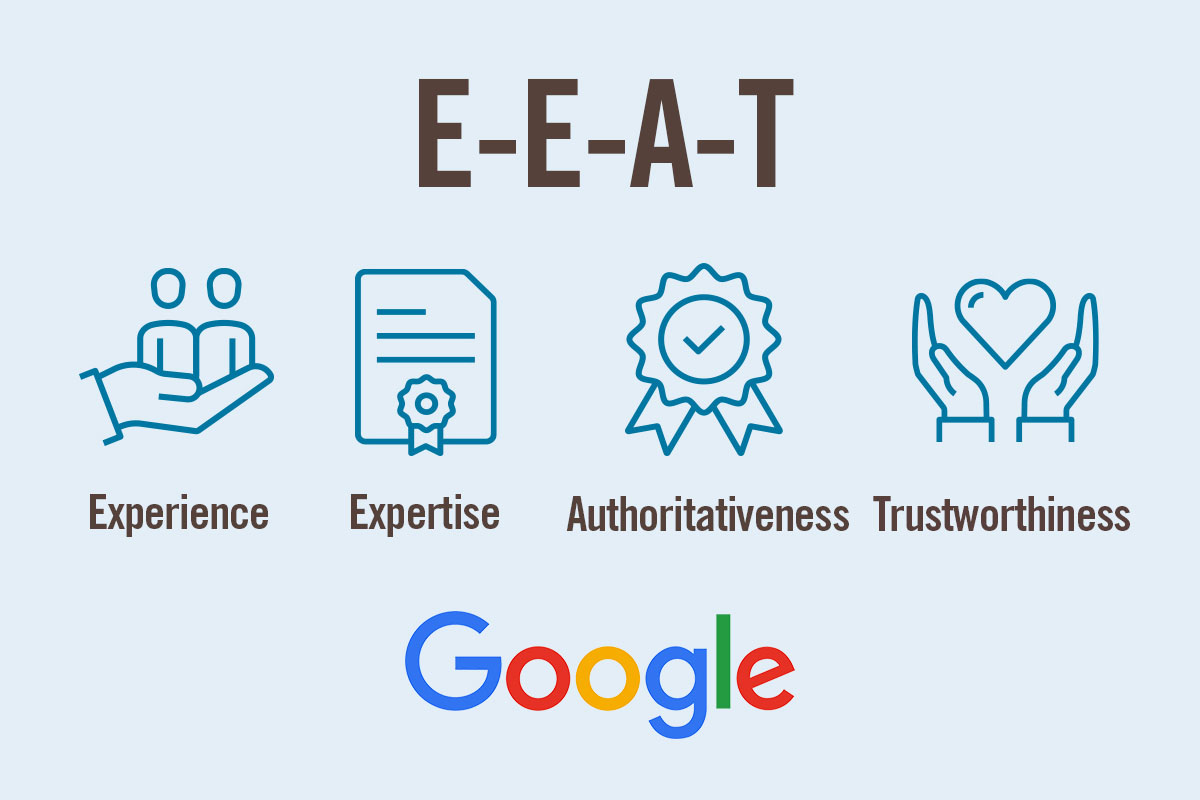
E-E-A-T stands for Experience, Expertise, Authoritativeness, and Trustworthiness. It originated within Google’s quality guidelines, but it now shapes how AI-driven search engines evaluate and surface information.
Here is what E-E-A-T for nonprofits really means in practice.
Experience
Are you showing lived experience and real impact?
For mental health and addiction treatment organizations, this may include recovery stories, testimonials, staff insights, and community partnerships.
Expertise
Are your services supported by qualified professionals?
This includes licensed clinicians, credentialed leadership, trauma-informed approaches, and clearly explained methodologies.
Authoritativeness
Is your organization recognized in your field?
Do you collaborate with respected partners? Are you cited, reviewed, or affiliated with established institutions? Do you have any awards or certifications?
Trustworthiness
Are you transparent about outcomes, funding, and services?
Clear contact information, updated content, privacy policies, and honest storytelling all build trust signals.
The truth is this. Most nonprofits already embody E-E-A-T. They simply don’t structure their content to communicate it clearly in AI search environments.
Why E-E-A-T Protects Funding, Referrals, and Visibility
E-E-A-T for nonprofits does more than just improve rankings. It protects your long-term sustainability.
When your organization clearly demonstrates credibility:
- Referral partners feel confident sending clients
- Grant funders see transparency and impact
- Families feel safer reaching out
- AI platforms surface your content in help-focused results
Kelly often reminds clients: “You’re not just competing for clicks anymore. You’re competing for trust. And trust is built intentionally through your content.”
Nonprofits are uniquely positioned to demonstrate lived experience and expertise. But without a structured nonprofit AI SEO strategy, those strengths remain invisible in AI-driven search.
Why Small Nonprofit Marketing Teams Feel Overwhelmed
We work primarily with mental health and addiction treatment organizations. Most of our clients have small teams, limited budgets, and no internal AI strategist.
That pressure feels real.
You are trying to:
- Build awareness and generate leads
- Update your website
- Create and manage social media
- Communicate consistently with key stakeholder audiences
- Recruit staff
- Support fundraising and community events
You are now being told to optimize for AI.
It can feel like one more impossible task.
Kelly acknowledges that hesitation: “It’s important to acknowledge that no one is an AI expert right now. That is exactly why it is important to start learning and experimenting. The organizations that begin adapting thoughtfully will be the ones that remain visible.”
E-E-A-T for nonprofits is not about mastering complex algorithms. It is about aligning your mission, your credibility, and your content strategy in a clear, intentional way.
How designRoom Helps Operationalize E-E-A-T
We don’t see AI as a replacement for creativity. We see it as a tool that amplifies human expertise when used responsibly.
Our nonprofit AI SEO strategy focuses on:
- Clarifying authorship and clinical expertise across your site
- Structuring service pages to reflect real experience and expertise
- Showcasing outcome data and impact stories
- Aligning brand voice with trust signals
- Optimizing content for AI search without losing warmth
We translate E-E-A-T for nonprofits into manageable systems that fit your capacity. This is about making sure the people who need help can find you.
A Final Thought on Embracing Change
The nonprofit sector has always adapted. Funding changes. Policies shift. Community needs evolve.
AI search is simply the next evolution.
Resisting it does not protect your mission. Learning to use it wisely does.
Kelly says it best: “The heart of your organization is human. AI does not replace that. It helps people find it. If we approach it thoughtfully, it becomes a bridge, not a barrier.”
If your team is feeling uncertain about where to begin, you’re not alone. But this is the moment to start building a nonprofit AI SEO strategy grounded in E-E-A-T, credibility, and care.
Because visibility is not vanity. For mission-driven organizations, it is access to help.

About the Author
Shaun is the Director of Digital Experience at designRoom, where he helps shape strategy and leads the development of digital platforms and websites. With more than 25 years of experience in digital marketing and web development, he began his career designing and developing websites before moving into a conceptual art director role and later transitioning to a more technical and analytical focus on user experience, accessibility, and performance.
Shaun relies on analytics, user behavior data, and emerging technologies, including the evolving role of AI, to better understand how people interact with digital platforms and guide thoughtful, measurable improvements. Over the past decade at designRoom, he has worked closely with nonprofit organizations in health care, mental health, and substance use treatment to build digital experiences that connect people with the services they need.
About dR
At designRoom, we make it our business to find real answers and create custom healthcare brands. We believe effective healthcare branding is grounded in research, directed by insight, and driven by strategy.
We love seeing how strategic branding helps the right clients find the right organizations and receive the right care. That’s been our focus for over a decade. Today designRoom is an award-winning, national branding and design firm, known for helping clients build and promote healthy, sustainable brands. And we are super proud of that.