
How I Use AI to Spend More Time on the Work That Matters Most
By Chad Gordon | April 14, 2026
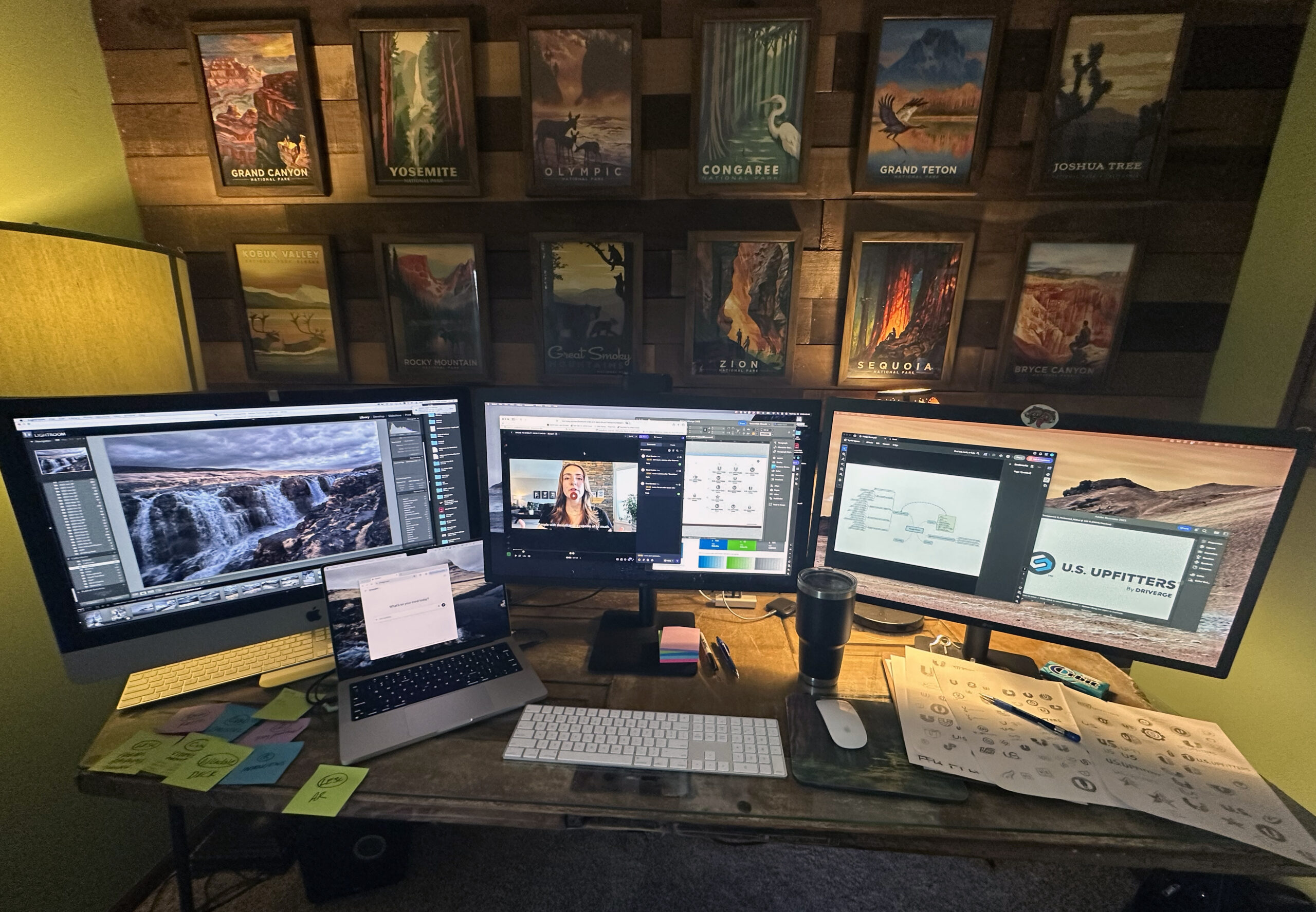
In my last post on the designRoom AI philosophy, I talked about how we think AI fits into our work.
I feel a bit funny writing two blog posts in a row about AI. I am no means an expert and find myself fumbling around with it. And AI is a bit scary and concerning at times. But I am immersing and learning every day, and most importantly, establishing where my boundaries with it lie.
Ultimately, using AI in healthcare marketing lets me spend less time on the work that needs to get done and more time on the parts of the job I’m actually trained for and am good at.
This is the more practical side of that conversation.
Getting up to speed
One of the most useful ways I use AI is to get oriented quickly. When we’re working for a new client or tackling a new problem in the behavioral health space, there’s usually a lot that needs to be understood before the real conversations can start (brand positioning, competition, etc.).
AI helps me move through that material faster, so we can spend more time talking about direction instead of background. And, conveniently, it lists sources so that I can double-check everything.
It’s not about getting answers. It’s about understanding the landscape.
Making sense of interviews
Over the years, we’ve conducted dozens of testimonial interviews as part of an ongoing mental health marketing campaign for a client that provides counseling for veterans. After each interview, I’d read through the transcript. There are often eight to ten pages of wall-to-wall text. I highlight moments that felt right and pass those sections along to our video editor for final cut suggestions.
Recently, for more impactful and diverse videos, we decided that we would create “mashups” from these past interviews - videos that combine multiple faces and viewpoints around shared themes like stigma, anxiety, or transition to civilian life. Instead of manually reviewing five years’ worth of transcripts, we created a project in ChatGPT, loaded the relevant interviews, and used a series of prompts to scan the material.
In seconds, AI was able to generate multiple 30-second script options using exact quotes, complete with time codes, and organized by theme. What would have taken hours of manual review happened almost instantly.
The important part: AI didn’t decide what worked. It surfaced options instantly. I chose what options worked and kept prompting until I found the right mix. The judgment - what felt authentic, what belonged together, what should make the final cut - was still entirely human.
Writing without getting stuck
I’m not a trained writer, but I do have to do a lot of writing. I know all the real good words to use, but not how to put them together fastly. So, writing a blog like this would have taken me hours in the past. I would get stuck with sentence structure and grammar. I’d spend too much time crafting a sentence and lose sight of the overall idea. Those are hours I could be using for something more important that matches my expertise, like developing visual identities for our healthcare clients.
Yes, AI assisted me with this blog. I wrote the first draft and gave it prompts to clean it up. I replaced words I would never use in real life. Got rid of ideas that didn’t match. It is still my idea and my voice, just cleaned up by AI.
Now, if I were a writer by trade, and I was writing specifically for clients, I would rail against my use. I get that. But I am not, and these blogs need to be done quickly-er so I can work on other stuff.
It’s the difference between trying to write something “correct” and just writing.
Planning and day-to-day work
I also use AI for practical things (planning, estimating, organizing work, proposals), the kinds of tasks that eat time but don’t really move the work forward.
Clearing those out leaves more room for thinking and collaboration.
Back to the darkroom
If the idea is the photograph, this is the darkroom part of the process.
The picture is already there. The decisions have already been made. AI just helps bring things into focus faster - revealing what’s already been exposed.
And by shortening the time spent in the darkroom, I get more time to focus on the work that actually matters more to me and the client.

About the Author
Chad Gordon is the Creative Director at designRoom, where he leads original brand development and marketing initiatives for national behavioral healthcare organizations. Since 1991, he has specialized in identity development and photo illustration, earning numerous national honors, including multiple ADDY Awards for excellence in design. Chad holds a degree in photo illustration from Ohio University and studied photography in Edinburgh, Scotland. His design work has been featured in international design publications, and his photography has been exhibited in galleries throughout Northeast Ohio.
About dR
At designRoom, we make it our business to find real answers and create custom healthcare brands. We believe effective healthcare branding is grounded in research, directed by insight, and driven by strategy.
We love seeing how strategic branding helps the right clients find the right organizations and receive the right care. That’s been our focus for over a decade. Today designRoom is an award-winning, national branding and design firm, known for helping clients build and promote healthy, sustainable brands. And we are super proud of that.